
I am excited to have made some changes on the blog….at least to get a more professional look…I hope the aim was achieved! (would really love to know your thoughts).
Okay, on to today’s feature, I have the pleasure of sharing the story of Andrea Denby. I am very much happy to share her story in particular because she completed her university education a long time ago (over 20 years ago) and as such has lots of experience to share in comparison to those who have already been featured. I do hope there is a thing or two you could pick out of it.
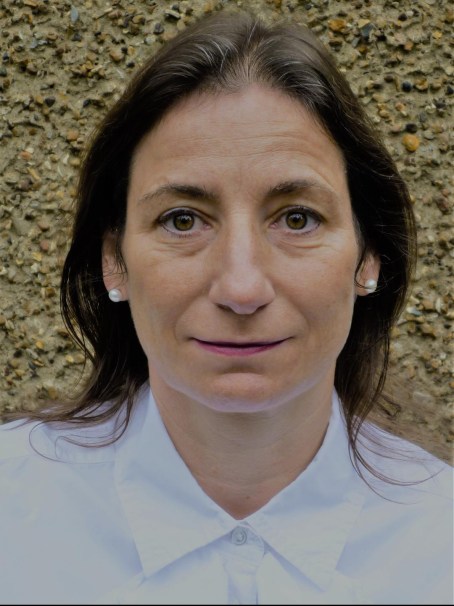
What is your name and what university did you attend?
My name is Andrea Denby. I would like to leave the universities with the second entry for the sake of cohesion.
What year did you graduate and what course did you offer?
I went to university at ELTE Budapest and studied English and Hungarian. These courses were thorough and gave me a proper grounding in these languages and the culture attached to them. I had excellent tutors teaching me general linguistics, Hungarian and English linguistics and literature, history of the British people, as well as European and American literature. I qualified as a lecturer in Hungarian and trained as a secondary-school teacher in English. The latter included learning some psychology and methodology, too. I finished these courses in 1996.
Later in the UK, I completed my doctorate at UCL UL. It taught me research skills and to focus my reading and research. I also learned to analyze my findings and summarise them. I completed my doctorate in 2006. I passed my DPSI in law in 2007. I developed an interest in law while working as an interpreter and completed GDL in English law at the University of Westminster in 2010.
Briefly describe how your university life; any extracurricular activities you were involved, scholarships, awards/ honors etc.
I have always done a lot of studying as a matter of interest, too. While I was a graduate, I chose history of culture courses which I really enjoyed, studied German and Latin. My Latin literacy is a great asset up to the present day. I often notice when students struggle with difficult words that they have very little or no knowledge of Latin words which could help them. I was offered support to continue my English studies in Budapest on a post-graduate level but was unable to because of family commitments.
Later in life, I read a lot of law at school and as a hobby. I came to feel the lack of my medical knowledge when I did tribunal work and the member of the medical panel often had to help me. I started my medical studies on my own. I joined Lucy Brooks webinars and followed a whole series on which I based detailed medical glossaries. I still read medicine on my own and with Lucy as a matter of interest. A new medical series will start again in the Spring. I am certain it will be worth the time and attention.
I would also like to share with you the Oplex courses. These courses are online and are available in a wide range of subjects at a minimal price. You enroll and go through, legal, medical, safeguarding, social sciences, administrative courses at your own pace online. Every now and again, I do one although recently I have been doing more medicine on my own. I am, however planning to do a child safeguarding course which is currently on offer. I also like to read about art in my switch off time.
Based on your experience in university, do you regret going to university or did you regret at a point? If so why?
No. I feel that my studies have given me more than I thought at the time. I often find that students or even practicing adults misunderstand or fail to understand the meaning of something because of lack of reading or understanding the cultural context. When I started my Ph.D., a researcher told me that when she was halfway through she felt she would never see the end of it. One does get that feeling in the course of one’s Ph.D. studies, especially when one works as well. Sticking at it, however, also teaches you honest persistence.
Upon graduation, did you have any plans as to what your next move was? Could you please share?
When I graduated, I did not really know what I wanted to do. I treasured the recommendation that my English Ph.D. thesis was good enough to continue and I left. My post-graduate studies in the United Kingdom fitted in with my children and I started these and started translating when they were very young.
The Home Office approached me while I was at the beginning of my post-graduate studies at Cambridge in 2000 and I joined the panel. As my children grew, I did more interpreting and I liked working with the Home Office. I worked at the asylum center in Oakington as a freelance interpreter at the very beginning of my career. Since then I have been working at many places and I still have very good memories of the people I worked with there. It was a dedicated honest team which treated people professionally and fairly.
I completed my Ph.D. studies in London and did my DPSI just a year later. In those days, this opened many doors and I have been working in a much wider field ever since I completed my DPSI in law.
Based on the answer from the question above, did these plans materialize in the short term or even long term? If it did what was the process like? If not, what happened? Did you have any backup plans?
Yes and no. Many of us, I believe have plans that materialize and plans that do not work out.
The fields I work in vary depending on the working conditions and circumstances. All through the years, however, I have developed a supporting professional attitude when interpreting and full dedication to my work when I am translating. By support, I mean that I facilitate communication as much as I can. I use a lot of my legal, medical and general knowledge when I translate, and I really enjoy translating. I also keep all confidential information to myself and tend to shed it as I leave either the office or the work premises. I believe this is very important. Your clients must know that they can fully trust you. This is what has worked out.
I wanted to practice law as a British citizen in a European/International environment. This is what has not worked out. I never wanted to do criminal law but it was the British criminal lawyers that never accepted me, therefore, I could never qualify in the United Kingdom. I honestly would not start along this line again but I would have liked to have qualified at the time. Should it have worked out, I would probably have difficulties at the moment because of the United Kingdom’s position in relation to Europe. I have not had any backup plans for this failure but have been putting more work into my medical studies, translating and teaching ever since. I use all my legal knowledge in my translations, and I can sincerely say that I enjoy translating.
In the case where you faced rejections especially in applying for jobs etc, what effect did it have on your person? Care to share any experiences if you had one?
I have put a lot of work into my career. I can honestly say that my knowledge of legal culture in my fields is outstanding and shows all these years of dedicated study. I have also learned a lot of medicine which I use in translation and interpreting and there are medical fields, so I know a lot about by now. I have never managed to get a job with full-time employment. I am over-qualified, know far too much about things, and have hardly any administrative skills. This has taught me to persist in what I do, learn when the line is quiet and have faith. I also do voluntary work occasionally. Whenever I can help someone fill in a form or help someone draft and translate the odd letter, or share my knowledge of procedure I will be pleased to do so. I like to help people. I believe we can do more by supporting each other.
I have also learned more technology and technical translation in a small specialized area. I am not a technical genius but always learn enough to keep up with up-to-date technical requirements. I am a very thorough translator, and know that translating tools are to our benefit. In my experience when you really try and you are dedicated to what you do you will always find someone who can use your skills properly.
If you were to be that 18/19 year old going back to university, knowing what you know now (irrespective of how many years after university) what advice will you give yourself? Any advice to others?
Try and focus although we are all different. Competition today is very tough and if you focus on what you want to do and achieve you will find it easier to get there.
With the current state of the job market, do you think in like 10 years time, universities will still have value? Especially with the rate at which many graduates end up being unemployed or young people prefer to start their businesses or train in apprenticeships?
To be a student today is much more difficult than when I was a student. During the years of my studies in Budapest, university was free. What is more, we had grants. I do not exactly remember how it depended on our result but I had good results in general and was always pleased with the small amount of money I received every month. When I studied in the UK the fees were reasonable and affordable. Today most students borrow. Despite this, I feel and I am certain that what you learn is a major part of you. You must also be able to succeed and apply your knowledge to something you really want to do and believe in doing.
What do you do now in terms of work or any other thing you are involved, care to share your social media handles so people could connect with you?
As I have set out above I strictly and only translate, proofread, interpret and occasionally teach for a living. I find that when people do part-time jobs, they often unavailable when someone needs them and then they will gradually move into another field with their jobs. Of course, there are exceptions. Pursuing this profession satisfactorily does demand full-time dedication even when there is no full-time work.
Most of us are on LinkedIn. LinkedIn is widely used by employers and by people looking for services. Forums are also useful, such as the different interpreters’ and translators’ forums and some agency platforms. There is Proz you can try and many other independent sites where you can register, too. Join CIoL as a student and get on their register. Occasionally people make contact with you. Set up your own website. This is something I have not done yet but may one day. Social media helps you spread your services around so that people can find you when they need you.
I am confident there is something you took out of this story. Stay tuned for another amazing feature…trust me the best is yet to come!
 Gertrude says......